
Recovery Assciation of America
- Dr. Robert Booker

- Apr 23, 2024
- 1 min read
Updated: Apr 29, 2024
This book is dedicated to helping all recovering addicts find and deepen a connection to their Higher Power, however they define it. Praying for Recovery is for confirmed believers or not-yet-believers looking for a new spiritual path. The author presents his own experience in overcoming his skepticism about a personal God and learning to pray for recovery with an open heart. Especially for this book he has translated Psalms that were instrumental in helping him to make the Twelve Steps a spiritual path for himself. The book offers them to other recovering addicts, along with accompanying prayers and meditations. Praying for Recovery can be used either by those working the twelve Steps for the first time, or by individuals who continue to revisit individual steps as part of their ongoing recovery. The book invites readers to build their own experiences of prayer upon the psalms and mediations presented here.
Want to read more?
Subscribe to dev-site-1x5395-1.wix-development-sites.org to keep reading this exclusive post.
1
Searing the Beef
Sear beef fillets on high heat for 2 minutes per side to form a golden crust. Let it cool before proceeding to keep the beef tender.
1
Searing the Beef
Sear beef fillets on high heat for 2 minutes per side to form a golden crust. Let it cool before proceeding to keep the beef tender.
1
Searing the Beef
Sear beef fillets on high heat for 2 minutes per side to form a golden crust. Let it cool before proceeding to keep the beef tender.
1
Searing the Beef
Sear beef fillets on high heat for 2 minutes per side to form a golden crust. Let it cool before proceeding to keep the beef tender.
Notes


1
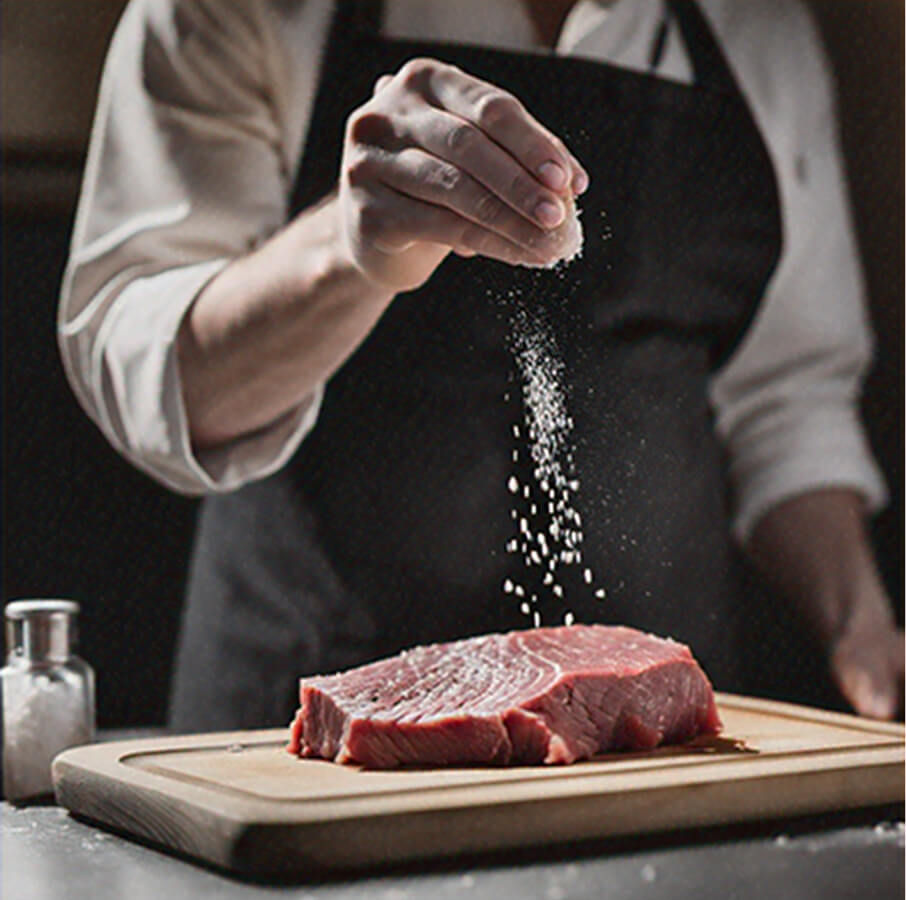
Season the good fresh beef fillets with salt and black pepper. Heat olive oil in a pan over high heat and sear the fillets for 2 minutes per side until it fully browned. Remove the beef from the pan and brush with a thin layer of mustard. Let it cool.
1
Season the good fresh beef fillets with salt and black pepper. Heat olive oil in a pan over high heat and sear the fillets for 2 minutes per side until it fully browned. Remove the beef from the pan and brush with a thin layer of mustard. Let it cool.
1
Season the good fresh beef fillets with salt and black pepper. Heat olive oil in a pan over high heat and sear the fillets for 2 minutes per side until it fully browned. Remove the beef from the pan and brush with a thin layer of mustard. Let it cool.
1
Season the good fresh beef fillets with salt and black pepper. Heat olive oil in a pan over high heat and sear the fillets for 2 minutes per side until it fully browned. Remove the beef from the pan and brush with a thin layer of mustard. Let it cool.
Instructions
Quality Fresh 2 beef fillets ( approximately 14 ounces each )
Quality Fresh 2 beef fillets ( approximately 14 ounces each )
Quality Fresh 2 beef fillets ( approximately 14 ounces each )
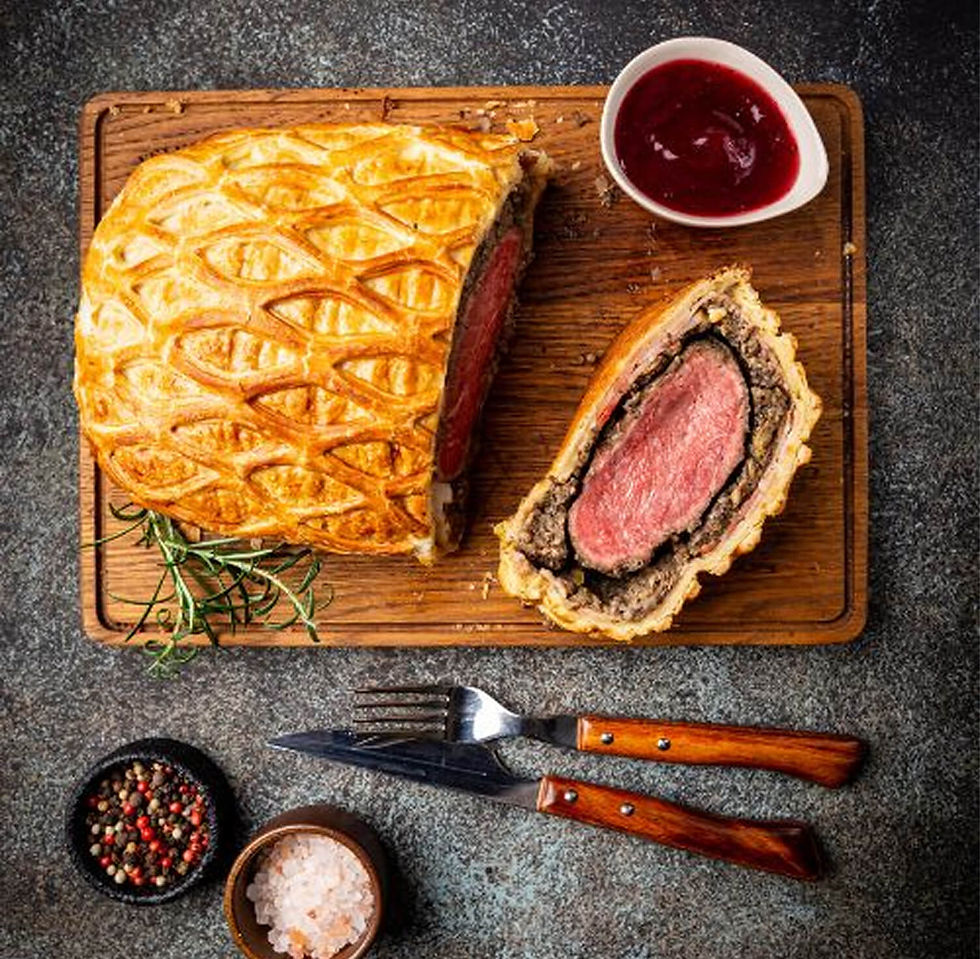
Beef Wellington
Beef Wellington
Fusion Wizard - Rooftop Eatery in Tokyo
Author Name
%20(1).jpg)
Beef Wellington is a luxurious dish featuring tender beef fillet coated with a flavorful mushroom duxelles and wrapped in a golden, flaky puff pastry. Perfect for special occasions, this recipe combines rich flavors and impressive presentation, making it the ultimate centerpiece for any celebration.
Servings :
4 Servings
Calories:
813 calories / Serve
Prep Time
30 mins
Prep Time
30 mins
Prep Time
30 mins
Prep Time
30 mins

$50
Product Title
Product Details goes here with the simple product description and more information can be seen by clicking the see more button. Product Details goes here with the simple product description and more information can be seen by clicking the see more button

$50
Product Title
Product Details goes here with the simple product description and more information can be seen by clicking the see more button. Product Details goes here with the simple product description and more information can be seen by clicking the see more button.
$50
Product Title
Product Details goes here with the simple product description and more information can be seen by clicking the see more button. Product Details goes here with the simple product description and more information can be seen by clicking the see more button.


![Stigma, originally referring to the visible marking of people considered inferior, has evolved in modern society into a social concept that applies to different groups or individuals based on certain characteristics such as socioeconomic status, culture, gender, race, religion, and health status. Social stigma can take different forms and depends on the specific time and place in which it arises. Once a person is stigmatized, they are often associated with stereotypes that lead to discrimination, marginalization, and psychological problems.[1] This process of stigmatization not only affects the social status and behavior of stigmatized persons, but also shapes their own self-perception, which can lead to psychological problems such as depression and low self-esteem. Stigmatized people are often aware that they are perceived and treated differently, which can start at an early age. Research shows that children are aware of cultural stereotypes at an early age, which affects their perce](https://static.wixstatic.com/media/480ebc_fa0d9d67f13c4a9fb16d59467f4ef0f9~mv2.jpeg/v1/fill/w_200,h_200,al_c,q_80,enc_avif,quality_auto/480ebc_fa0d9d67f13c4a9fb16d59467f4ef0f9~mv2.jpeg)