Mental Health Awareness
- Dr. Robert Booker

- Sep 10, 2024
- 2 min read
Updated: Oct 28, 2024

Privacy is a concept that relates to the protection and control of personal information or data. It refers to an individual's right to keep certain aspects of their life and personal information confidential and to control how that information is collected, used, and shared by others.
In the digital age, privacy has become increasingly important due to the vast amount of personal data generated and collected by various online platforms, services, and devices. This data may include personal details, browsing habits, location information, financial data, and more. Privacy concerns arise when there is unauthorized access, use, or sharing of this data without the owner's knowledge or consent.
To protect privacy, various measures can be taken, such as:
1. Data protection and encryption: Encrypting data can help ensure that it remains secure and unreadable to unauthorized parties. Data protection regulations, such as the General Data Protection Regulation (GDPR), also provide guidelines for organizations on handling personal data.
2. Consent and transparency: Individuals should have the right to know what data is being collected, how it is being used, and with whom it is being shared. Organizations should obtain informed consent before collecting and processing personal information.
3. Privacy settings and controls: Many online platforms and services offer privacy settings that allow users to control the visibility of their information, adjust data sharing preferences, and limit access to their data.
4. Secure communication: Using encrypted communication channels, such as end-to-end encryption, can help protect the privacy of conversations and sensitive information.
5. Strong passwords and authentication: Utilizing strong, unique passwords
If you are referring to "Booker," it could be a reference to the Booker Prize, also known as the Man Booker Prize. The Booker Prize is a prestigious literary award given annually for the best original novel written in English and published in the United Kingdom. It was established in 1969 and has since become one of the most renowned literary awards in the world.
The award was originally open to authors from the Commonwealth, Ireland, and Zimbabwe. However, in 2014, the rules were expanded to include any novel written in English and published in the UK, regardless of the author's nationality.
The Booker Prize aims to recognize and celebrate outstanding works of fiction and has a significant impact on an author's career and book sales. Winning the Booker Prize often leads to increased visibility and critical acclaim for the author and their work.
The judging panel for the Booker Prize changes each year, and they evaluate the nominated books based on their literary merit, originality, and overall quality. The winner of the Booker Prize receives a cash prize and a boost in exposure and recognition in the literary world.
It's worth noting that there have been some changes to the sponsorship and name of the prize over the years. From 2002 to 2019, it was known as the Man Booker
1
Searing the Beef
Sear beef fillets on high heat for 2 minutes per side to form a golden crust. Let it cool before proceeding to keep the beef tender.
1
Searing the Beef
Sear beef fillets on high heat for 2 minutes per side to form a golden crust. Let it cool before proceeding to keep the beef tender.
1
Searing the Beef
Sear beef fillets on high heat for 2 minutes per side to form a golden crust. Let it cool before proceeding to keep the beef tender.
1
Searing the Beef
Sear beef fillets on high heat for 2 minutes per side to form a golden crust. Let it cool before proceeding to keep the beef tender.
Notes


1
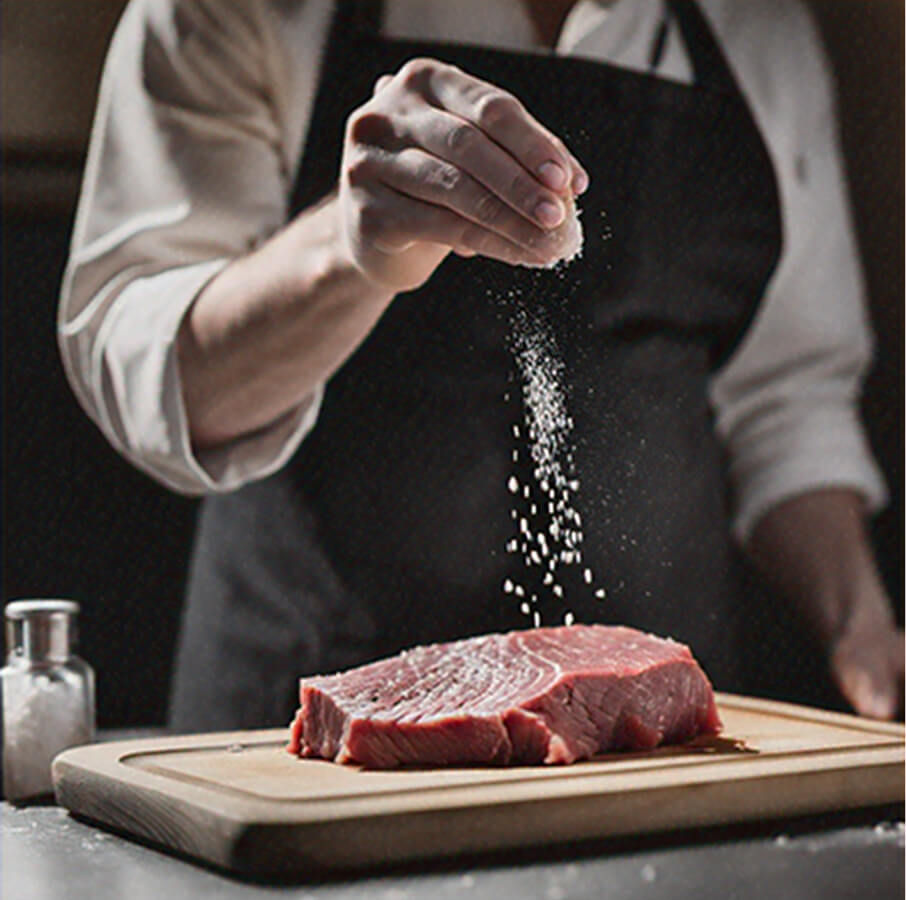
Season the good fresh beef fillets with salt and black pepper. Heat olive oil in a pan over high heat and sear the fillets for 2 minutes per side until it fully browned. Remove the beef from the pan and brush with a thin layer of mustard. Let it cool.
1
Season the good fresh beef fillets with salt and black pepper. Heat olive oil in a pan over high heat and sear the fillets for 2 minutes per side until it fully browned. Remove the beef from the pan and brush with a thin layer of mustard. Let it cool.
1
Season the good fresh beef fillets with salt and black pepper. Heat olive oil in a pan over high heat and sear the fillets for 2 minutes per side until it fully browned. Remove the beef from the pan and brush with a thin layer of mustard. Let it cool.
1
Season the good fresh beef fillets with salt and black pepper. Heat olive oil in a pan over high heat and sear the fillets for 2 minutes per side until it fully browned. Remove the beef from the pan and brush with a thin layer of mustard. Let it cool.
Instructions
Quality Fresh 2 beef fillets ( approximately 14 ounces each )
Quality Fresh 2 beef fillets ( approximately 14 ounces each )
Quality Fresh 2 beef fillets ( approximately 14 ounces each )
Beef Wellington
Beef Wellington
Fusion Wizard - Rooftop Eatery in Tokyo
Author Name
%20(1).jpg)
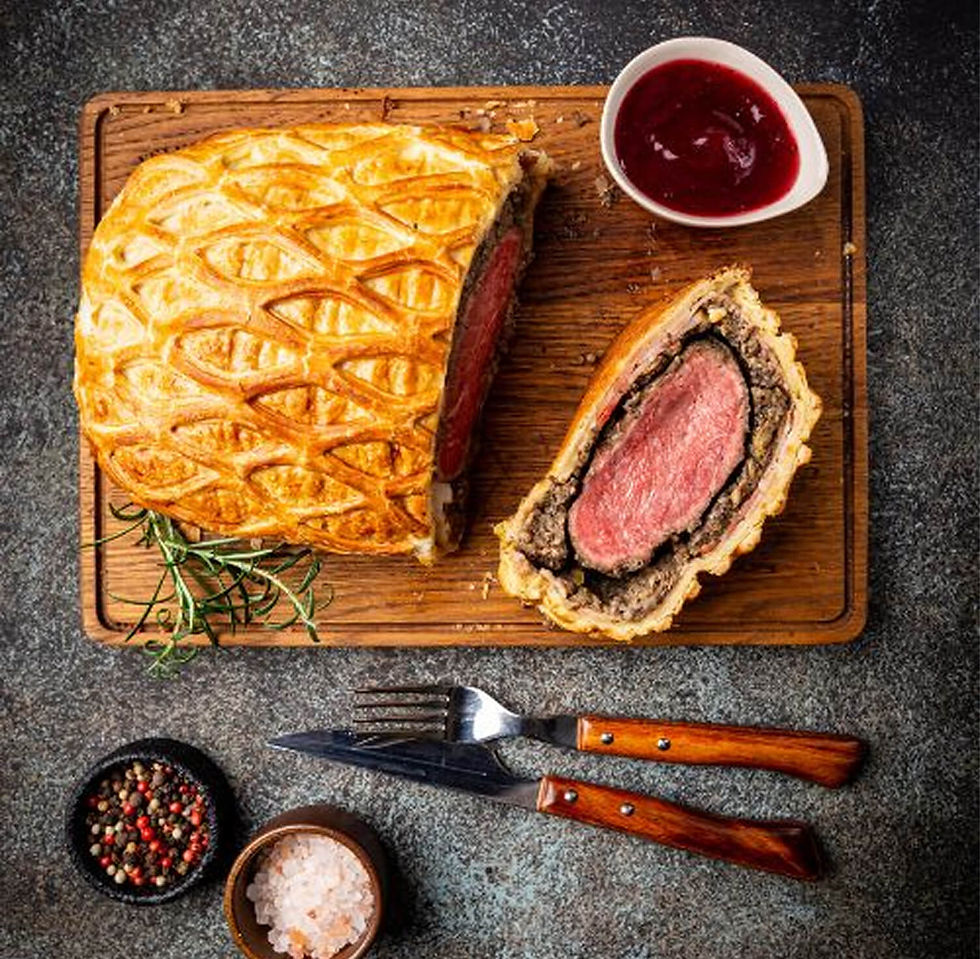
Beef Wellington is a luxurious dish featuring tender beef fillet coated with a flavorful mushroom duxelles and wrapped in a golden, flaky puff pastry. Perfect for special occasions, this recipe combines rich flavors and impressive presentation, making it the ultimate centerpiece for any celebration.
Servings :
4 Servings
Calories:
813 calories / Serve
Prep Time
30 mins
Prep Time
30 mins
Prep Time
30 mins
Prep Time
30 mins

$50
Product Title
Product Details goes here with the simple product description and more information can be seen by clicking the see more button. Product Details goes here with the simple product description and more information can be seen by clicking the see more button

$50
Product Title
Product Details goes here with the simple product description and more information can be seen by clicking the see more button. Product Details goes here with the simple product description and more information can be seen by clicking the see more button.
$50
Product Title
Product Details goes here with the simple product description and more information can be seen by clicking the see more button. Product Details goes here with the simple product description and more information can be seen by clicking the see more button.


Comments