Unlocking the Secrets of Nature’s Charms: Exploring the Enchanting World of Flowers
- Dr. Robert Booker

- Jun 27, 2024
- 2 min read
Flowers have a magical way of captivating our senses—through their vibrant colors, delicate petals, and captivating scents, they have the power to transport us to a world of beauty and serenity. In this blog post, we delve into the enchanting world of flowers, uncovering the secrets and wonders that make them truly mesmerizing.
Have you ever heard of the language of flowers? In Victorian times, flowers were used to convey messages and emotions that words couldn't express. From the passionate red rose symbolizing love to the innocence of the daisy, each flower carries a unique symbolism that adds depth and meaning to floral arrangements.
While we often admire flowers for their aesthetic appeal, their beauty goes beyond what meets the eye. Flowers play a crucial role in the ecosystem, supporting pollinators like bees and butterflies and contributing to biodiversity. Through the process of photosynthesis, flowers also help produce oxygen, making them essential for life on Earth.
Have you ever wondered why flowers have such distinct and captivating scents? The secret lies in the flowers' essential oils, which are responsible for the fragrances we associate with different blooms. From the soothing scent of lavender to the invigorating aroma of roses, each flower offers a unique olfactory experience that delights the senses.
Flowers have long been used for their medicinal properties, with traditional healing practices harnessing the therapeutic benefits of various blooms. Lavender is known for its calming effects, while calendula is revered for its antiseptic properties. Incorporating flower essences into aromatherapy and skincare routines can promote overall well-being and relaxation.
Whether you're crafting a bouquet for a special occasion or simply brightening up your home, flower arranging is an art form that allows you to unleash your creativity. Experiment with different color palettes, textures, and shapes to create stunning floral displays that bring joy and beauty into your space.
Each season brings its own unique array of flowers, from the vibrant tulips of spring to the cozy chrysanthemums of fall. Embrace the seasonal splendor by incorporating seasonal blooms into your decor and celebrations, connecting with nature's cycles and experiencing the ever-changing beauty of the floral world.
Few gestures are as timeless and thoughtful as giving someone a bouquet of flowers. Whether it's to express love, gratitude, or sympathy, flowers have a way of conveying emotions in a truly meaningful way. Surprise a loved one with a bouquet and watch as the magic of flowers brightens their day.
In conclusion, flowers are not just plants; they are symbols of beauty, love, and connection. By immersing ourselves in the enchanting world of flowers, we are reminded of the wonders of nature and the joy that blooms in every petal.
Let's celebrate the magic of flowers and the joy they bring to our lives!
SEO Keywords: Flowers, Floral Beauty, Nature's Charms, Floral Scents, Flower Arranging, Seasonal Blooms, Gift of Flowers
1
Searing the Beef
Sear beef fillets on high heat for 2 minutes per side to form a golden crust. Let it cool before proceeding to keep the beef tender.
1
Searing the Beef
Sear beef fillets on high heat for 2 minutes per side to form a golden crust. Let it cool before proceeding to keep the beef tender.
1
Searing the Beef
Sear beef fillets on high heat for 2 minutes per side to form a golden crust. Let it cool before proceeding to keep the beef tender.
1
Searing the Beef
Sear beef fillets on high heat for 2 minutes per side to form a golden crust. Let it cool before proceeding to keep the beef tender.
Notes


1
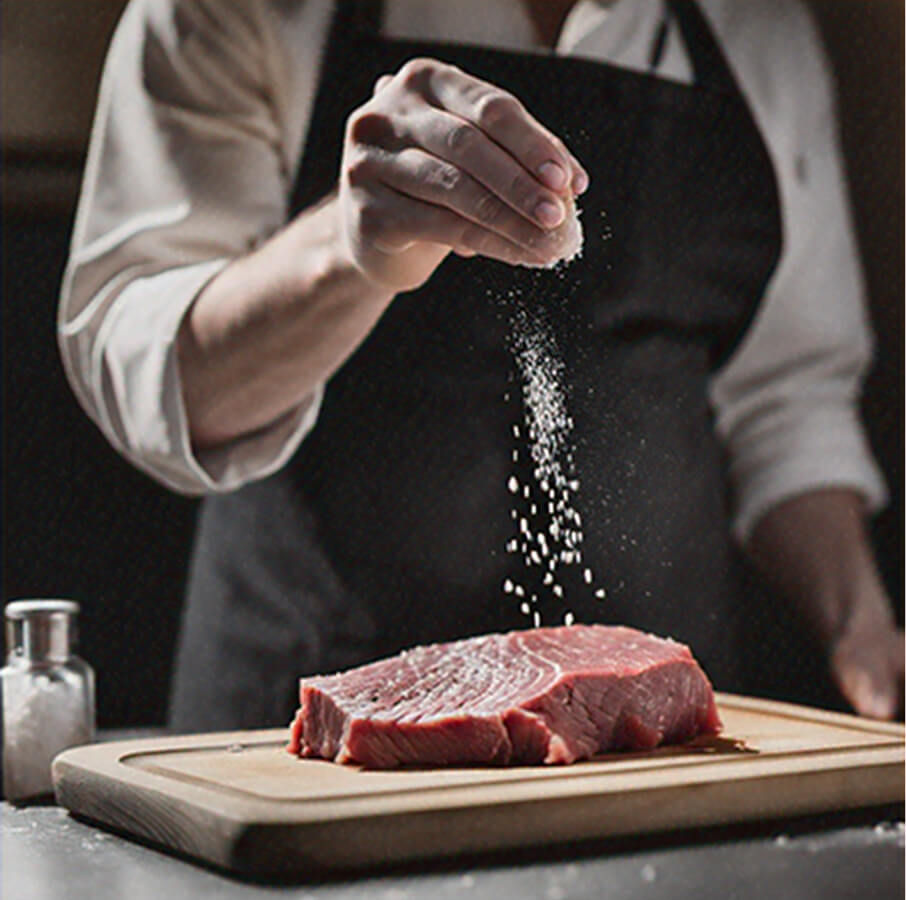
Season the good fresh beef fillets with salt and black pepper. Heat olive oil in a pan over high heat and sear the fillets for 2 minutes per side until it fully browned. Remove the beef from the pan and brush with a thin layer of mustard. Let it cool.
1
Season the good fresh beef fillets with salt and black pepper. Heat olive oil in a pan over high heat and sear the fillets for 2 minutes per side until it fully browned. Remove the beef from the pan and brush with a thin layer of mustard. Let it cool.
1
Season the good fresh beef fillets with salt and black pepper. Heat olive oil in a pan over high heat and sear the fillets for 2 minutes per side until it fully browned. Remove the beef from the pan and brush with a thin layer of mustard. Let it cool.
1
Season the good fresh beef fillets with salt and black pepper. Heat olive oil in a pan over high heat and sear the fillets for 2 minutes per side until it fully browned. Remove the beef from the pan and brush with a thin layer of mustard. Let it cool.
Instructions
Quality Fresh 2 beef fillets ( approximately 14 ounces each )
Quality Fresh 2 beef fillets ( approximately 14 ounces each )
Quality Fresh 2 beef fillets ( approximately 14 ounces each )
Beef Wellington
Beef Wellington
Fusion Wizard - Rooftop Eatery in Tokyo
Author Name
%20(1).jpg)
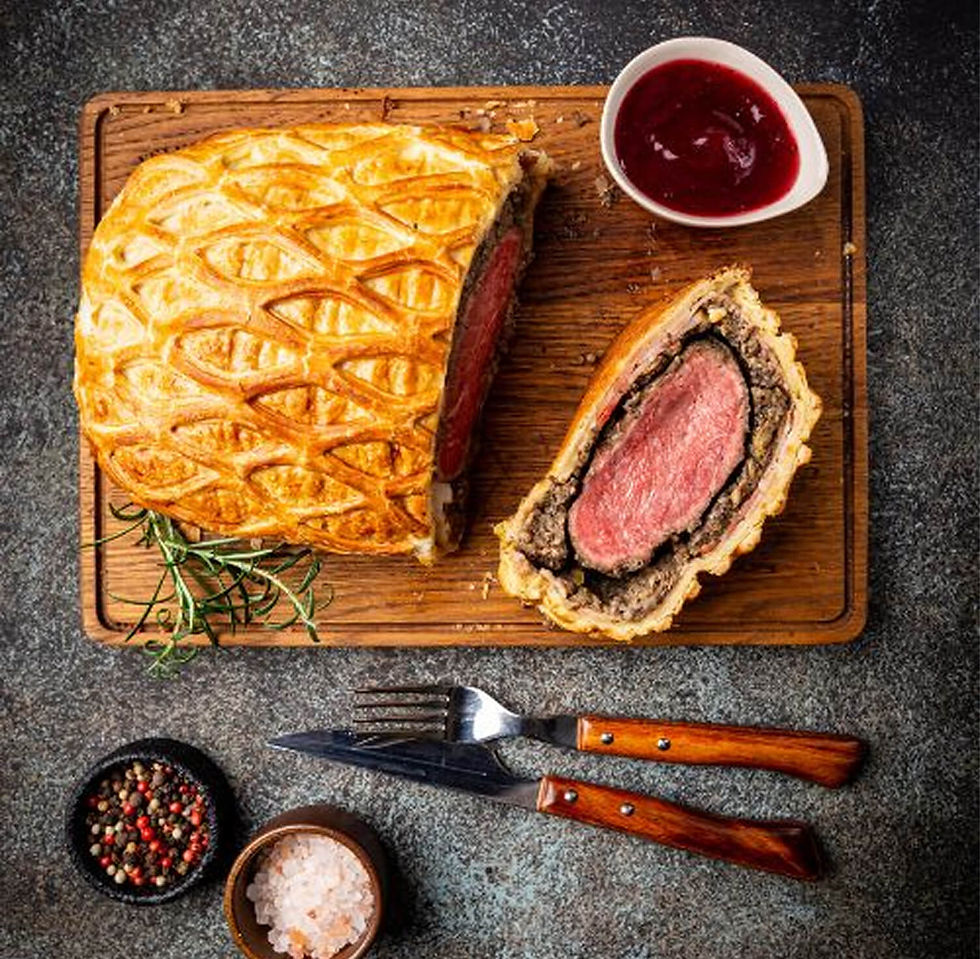
Beef Wellington is a luxurious dish featuring tender beef fillet coated with a flavorful mushroom duxelles and wrapped in a golden, flaky puff pastry. Perfect for special occasions, this recipe combines rich flavors and impressive presentation, making it the ultimate centerpiece for any celebration.
Servings :
4 Servings
Calories:
813 calories / Serve
Prep Time
30 mins
Prep Time
30 mins
Prep Time
30 mins
Prep Time
30 mins

$50
Product Title
Product Details goes here with the simple product description and more information can be seen by clicking the see more button. Product Details goes here with the simple product description and more information can be seen by clicking the see more button

$50
Product Title
Product Details goes here with the simple product description and more information can be seen by clicking the see more button. Product Details goes here with the simple product description and more information can be seen by clicking the see more button.
$50
Product Title
Product Details goes here with the simple product description and more information can be seen by clicking the see more button. Product Details goes here with the simple product description and more information can be seen by clicking the see more button.


![Stigma, originally referring to the visible marking of people considered inferior, has evolved in modern society into a social concept that applies to different groups or individuals based on certain characteristics such as socioeconomic status, culture, gender, race, religion, and health status. Social stigma can take different forms and depends on the specific time and place in which it arises. Once a person is stigmatized, they are often associated with stereotypes that lead to discrimination, marginalization, and psychological problems.[1] This process of stigmatization not only affects the social status and behavior of stigmatized persons, but also shapes their own self-perception, which can lead to psychological problems such as depression and low self-esteem. Stigmatized people are often aware that they are perceived and treated differently, which can start at an early age. Research shows that children are aware of cultural stereotypes at an early age, which affects their perce](https://static.wixstatic.com/media/480ebc_fa0d9d67f13c4a9fb16d59467f4ef0f9~mv2.jpeg/v1/fill/w_200,h_200,al_c,q_80,enc_avif,quality_auto/480ebc_fa0d9d67f13c4a9fb16d59467f4ef0f9~mv2.jpeg)
Comments