Breaking the Stigma: Promoting Mental Health Awareness
- Dr. Robert Booker

- Nov 22, 2023
- 3 min read
Updated: Aug 7, 2024

<p>Hey there, fellow readers! Today, we're diving into an important topic that tends to get pushed under the rug far too often: mental health. It's time to break the stigma surrounding it and promote awareness. After all, we're here in America, the land of the free and home of the brave, right? So, let's be brave and have an open conversation about mental health.</p>
<p></p>
<p> Now, you might be wondering, why is it essential to talk about mental health in the first place? Well, my friends, the fact is that mental health affects each and every one of us. Whether it's anxiety, depression, ADHD, or any other conditions, we all know someone who has faced their own battle. It's time to acknowledge that mental health is just as crucial as physical health. And guess what? Both can affect and influence one another.</p>
<p></p>
<p> So, how do we begin to tackle this stigma? Education is key. We need to arm ourselves with knowledge and understanding about mental health conditions. By doing so, we can combat misconceptions and stereotypes surrounding the topic. Let's start by breaking down some common myths that have unfortunately been perpetuated for far too long.</p>
<p></p>
<p> Myth #1: Mental health problems are a sign of weakness.</p>
<p> Reality: Absolutely not! Mental health conditions have nothing to do with being weak. They are medical conditions, just like any other illness. Just as we wouldn't blame someone for having the flu or a broken bone, we shouldn't shame someone for their mental health struggles.</p>
<p></p>
<p> Myth #2: People with mental health issues are dangerous and unpredictable.</p>
<p> Reality: Hollywood movies and media portrayals might have led you to believe this, but it couldn't be further from the truth. The vast majority of individuals with mental health conditions are not violent or dangerous. In fact, they are more likely to be victims of violence than perpetrators.</p>
<p></p>
<p> Myth #3: Seeking help is a sign of failure.</p>
<p> Reality: Seeking help is a brave and courageous act. It takes strength to acknowledge when we can't do it alone. Just as we would seek help for a physical ailment, there should be no shame in reaching out for mental health support.</p>
<p></p>
<p> Now that we've busted some myths, let's talk about how we can be more a part of America, the land of the free and home of the brave. It all starts with acceptance and understanding. We need to create an environment where individuals feel safe to share their experiences without fear of judgment or discrimination.</p>
<p></p>
<p> Additionally, it's essential to support mental health organizations and initiatives. By raising awareness and donating our time or resources, we can contribute to the cause and make a difference. Whether it's volunteering at a local mental health clinic or participating in fundraising events, every small action counts.</p>
<p></p>
<p> Let's also remember to check in on our loved ones. Mental health issues can be isolating, and sometimes, all it takes is a simple conversation to make someone feel seen and cared for. By actively engaging with one another, we can create a supportive community where individuals feel comfortable discussing their mental health challenges.</p>
<p></p>
<p> In conclusion, it's time to break the stigma surrounding mental health and promote awareness. By educating ourselves, busting myths, and offering support, we can help build a society where mental health is treated with the same importance as physical health. So let's be brave, kind, and compassionate – after all, that's what America, the land of the free, is all about.</p>
1
Searing the Beef
Sear beef fillets on high heat for 2 minutes per side to form a golden crust. Let it cool before proceeding to keep the beef tender.
1
Searing the Beef
Sear beef fillets on high heat for 2 minutes per side to form a golden crust. Let it cool before proceeding to keep the beef tender.
1
Searing the Beef
Sear beef fillets on high heat for 2 minutes per side to form a golden crust. Let it cool before proceeding to keep the beef tender.
1
Searing the Beef
Sear beef fillets on high heat for 2 minutes per side to form a golden crust. Let it cool before proceeding to keep the beef tender.
Notes


1
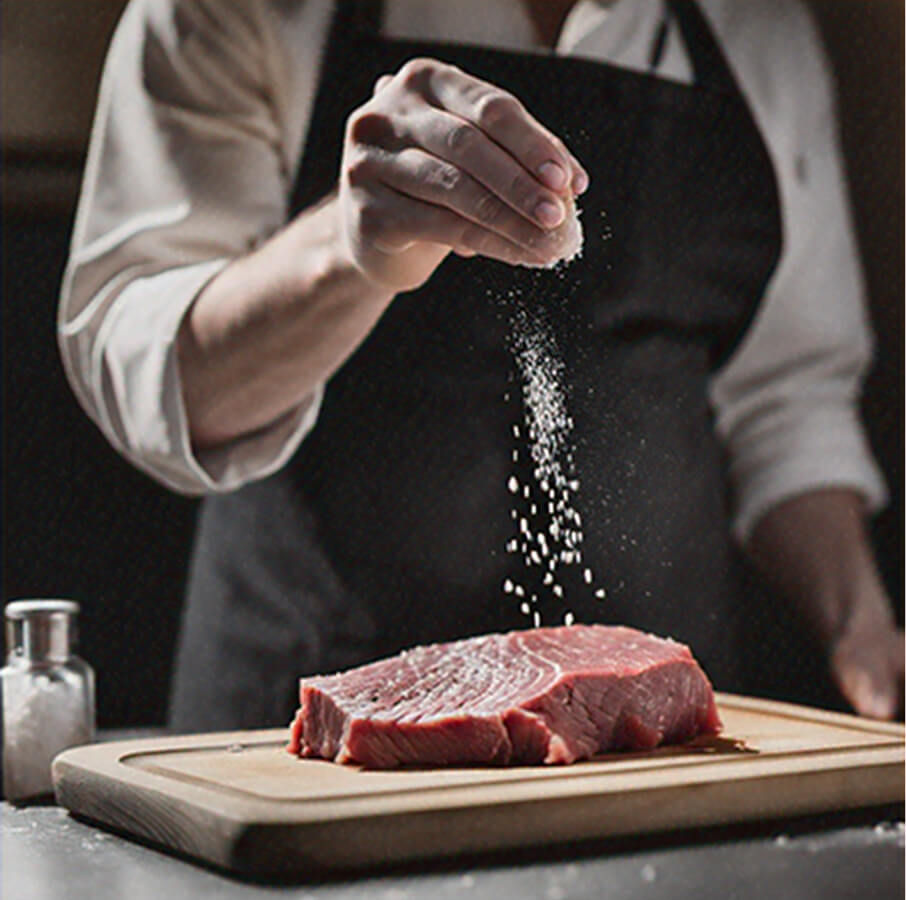
Season the good fresh beef fillets with salt and black pepper. Heat olive oil in a pan over high heat and sear the fillets for 2 minutes per side until it fully browned. Remove the beef from the pan and brush with a thin layer of mustard. Let it cool.
1
Season the good fresh beef fillets with salt and black pepper. Heat olive oil in a pan over high heat and sear the fillets for 2 minutes per side until it fully browned. Remove the beef from the pan and brush with a thin layer of mustard. Let it cool.
1
Season the good fresh beef fillets with salt and black pepper. Heat olive oil in a pan over high heat and sear the fillets for 2 minutes per side until it fully browned. Remove the beef from the pan and brush with a thin layer of mustard. Let it cool.
1
Season the good fresh beef fillets with salt and black pepper. Heat olive oil in a pan over high heat and sear the fillets for 2 minutes per side until it fully browned. Remove the beef from the pan and brush with a thin layer of mustard. Let it cool.
Instructions
Quality Fresh 2 beef fillets ( approximately 14 ounces each )
Quality Fresh 2 beef fillets ( approximately 14 ounces each )
Quality Fresh 2 beef fillets ( approximately 14 ounces each )
Beef Wellington
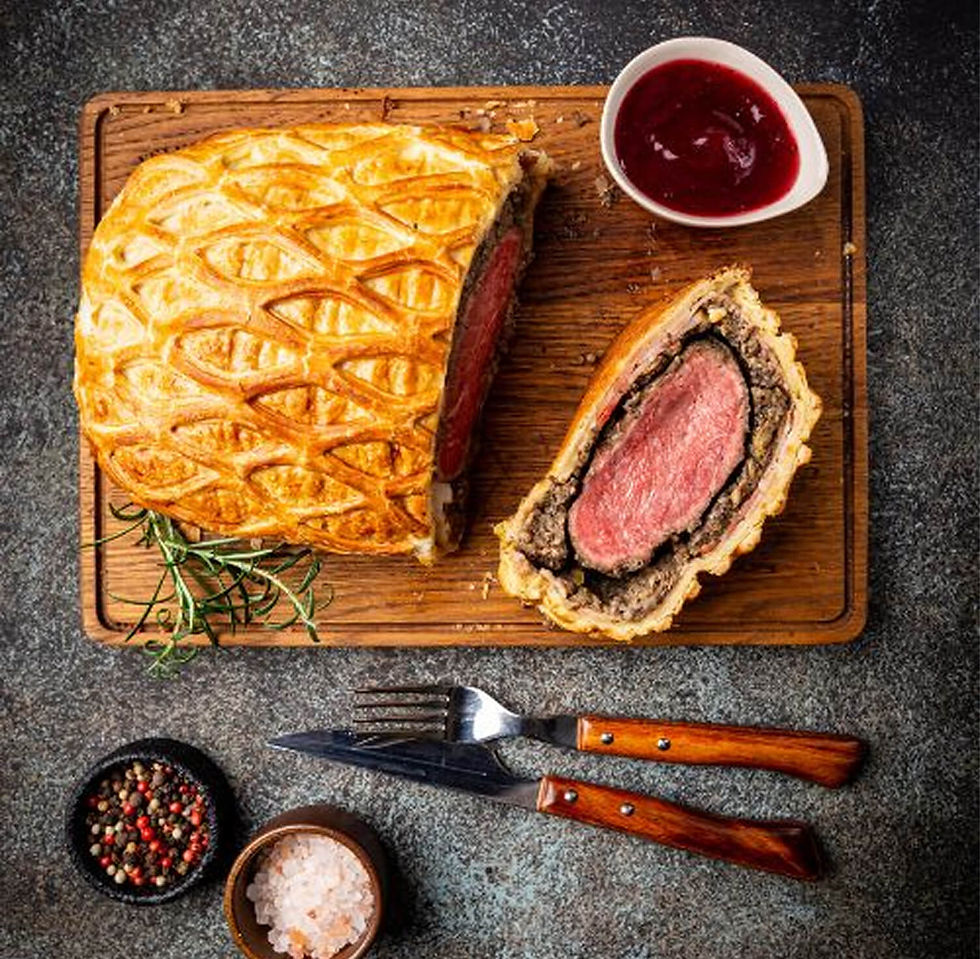
Beef Wellington
Fusion Wizard - Rooftop Eatery in Tokyo
Author Name
%20(1).jpg)
Beef Wellington is a luxurious dish featuring tender beef fillet coated with a flavorful mushroom duxelles and wrapped in a golden, flaky puff pastry. Perfect for special occasions, this recipe combines rich flavors and impressive presentation, making it the ultimate centerpiece for any celebration.
Servings :
4 Servings
Calories:
813 calories / Serve
Prep Time
30 mins
Prep Time
30 mins
Prep Time
30 mins
Prep Time
30 mins

$50
Product Title
Product Details goes here with the simple product description and more information can be seen by clicking the see more button. Product Details goes here with the simple product description and more information can be seen by clicking the see more button

$50
Product Title
Product Details goes here with the simple product description and more information can be seen by clicking the see more button. Product Details goes here with the simple product description and more information can be seen by clicking the see more button.
$50
Product Title
Product Details goes here with the simple product description and more information can be seen by clicking the see more button. Product Details goes here with the simple product description and more information can be seen by clicking the see more button.


Comments