Your Title: What Is Your Advice (or Tip) About?
- Dr. Robert Booker

- Jun 4, 2024
- 2 min read
Updated: Jun 5, 2024

Sample Titles: How to Pack for a Beach Holiday or 5 Secrets to Packing Light for a Beach Holiday or Best Travel Luggage for Kids & Families
To boost the post’s SEO, include a keyword in the title.

Now that we’ve introduced your topic with a short and catchy title, it’s time to write your introductory paragraph. This is your chance to grab your reader’s attention. You can explain why you are the best person to give advice on this topic; share a personal story that reflects your own experience on the subject; and/or highlight common mistakes that can be avoided once applying your useful tips.
Before listing your tips below, add one last sentence that sums up your paragraph or offers a smooth transition to your listicle.
Tip #1 - Engage readers right away
This first tip should be a juicy one. It’ll keep your readers with you.
Format each tip's title to H2 to keep your post neat.
Tip #2 - Explain more
The middle tips should go into a bit more detail, explain more. Keep them short and to-the-point. E.g., if you're writing a post about how to blog, you can write something like: "Decide how often you want to blog. Be realistic about it. Think you can blog twice a month? Commit to once a month and stick to it."
"Include quotes by experts in your post to add credibility." – SEO specialist
Tip #3 - Make it personal
Feel free to include personal details and examples. The more relatable you or your website is, the more you connect with your readers.
Tip #4 - Mix it up
Try different blog formats each time. One month, post a day in the life, then try a How-To or a Q&A. There are many templates to help you get started.
Tip #5 - Finish strong
Your final tip will lead into your post’s conclusion. For example, “Lastly, knowing just a little bit about SEO can go a long way in helping your blog succeed. You can learn more about SEO in our guide.” Then be sure to add a link to your guide here.
Don’t Forget to Add a Closing Statement
Keep it short. Restate your main point and tell your readers what you want them to do next. Don’t be shy. Just tell them: Buy Now, Click Here, Read This, and link to it. You can also invite them to leave a comment below your post.
1
Searing the Beef
Sear beef fillets on high heat for 2 minutes per side to form a golden crust. Let it cool before proceeding to keep the beef tender.
1
Searing the Beef
Sear beef fillets on high heat for 2 minutes per side to form a golden crust. Let it cool before proceeding to keep the beef tender.
1
Searing the Beef
Sear beef fillets on high heat for 2 minutes per side to form a golden crust. Let it cool before proceeding to keep the beef tender.
1
Searing the Beef
Sear beef fillets on high heat for 2 minutes per side to form a golden crust. Let it cool before proceeding to keep the beef tender.
Notes


1
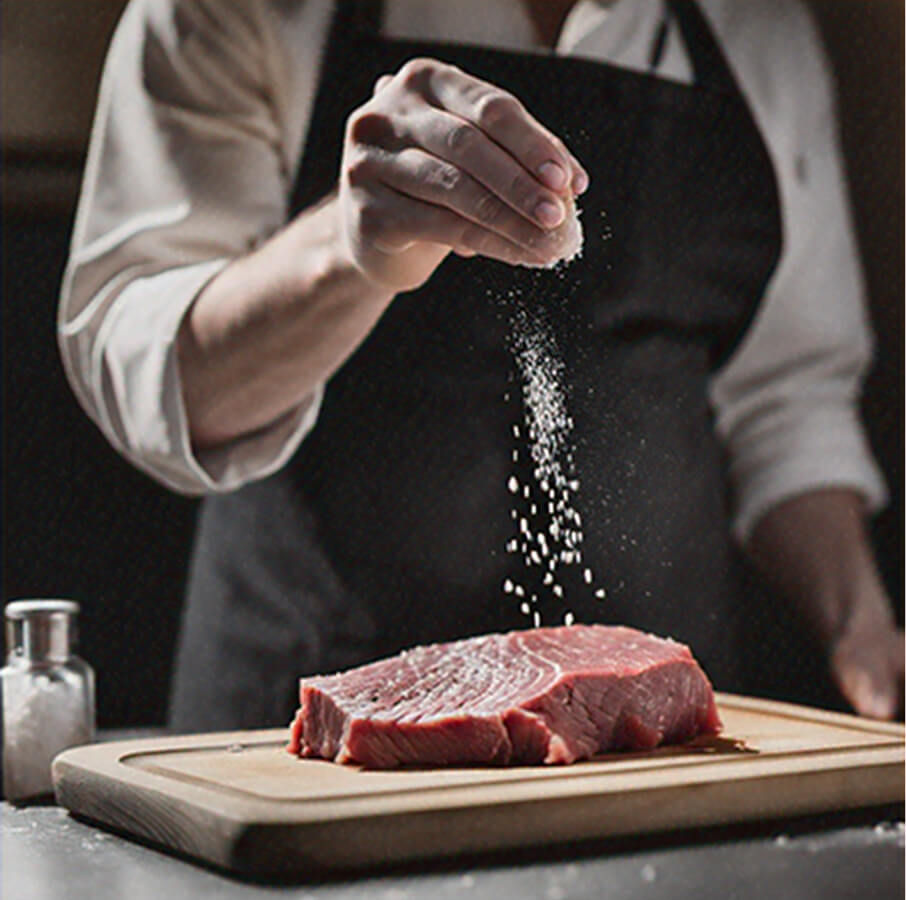
Season the good fresh beef fillets with salt and black pepper. Heat olive oil in a pan over high heat and sear the fillets for 2 minutes per side until it fully browned. Remove the beef from the pan and brush with a thin layer of mustard. Let it cool.
1
Season the good fresh beef fillets with salt and black pepper. Heat olive oil in a pan over high heat and sear the fillets for 2 minutes per side until it fully browned. Remove the beef from the pan and brush with a thin layer of mustard. Let it cool.
1
Season the good fresh beef fillets with salt and black pepper. Heat olive oil in a pan over high heat and sear the fillets for 2 minutes per side until it fully browned. Remove the beef from the pan and brush with a thin layer of mustard. Let it cool.
1
Season the good fresh beef fillets with salt and black pepper. Heat olive oil in a pan over high heat and sear the fillets for 2 minutes per side until it fully browned. Remove the beef from the pan and brush with a thin layer of mustard. Let it cool.
Instructions
Quality Fresh 2 beef fillets ( approximately 14 ounces each )
Quality Fresh 2 beef fillets ( approximately 14 ounces each )
Quality Fresh 2 beef fillets ( approximately 14 ounces each )
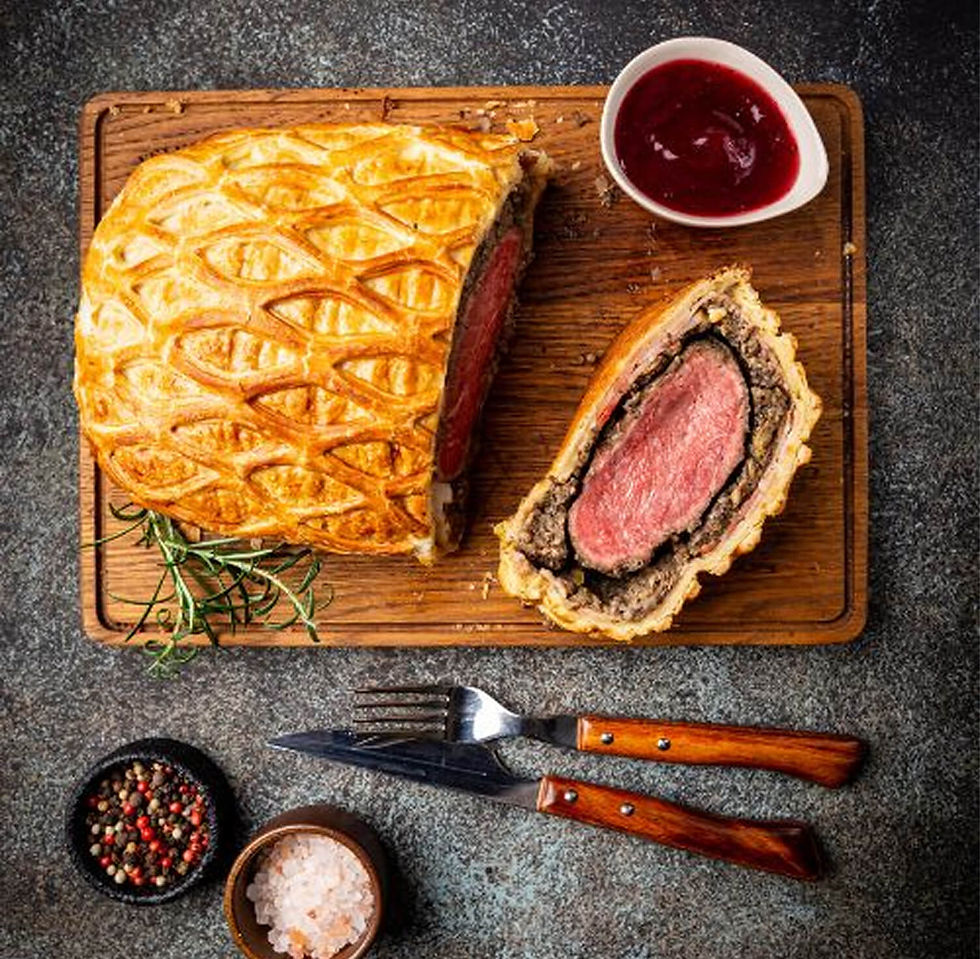
Beef Wellington
Beef Wellington
Fusion Wizard - Rooftop Eatery in Tokyo
Author Name
%20(1).jpg)
Beef Wellington is a luxurious dish featuring tender beef fillet coated with a flavorful mushroom duxelles and wrapped in a golden, flaky puff pastry. Perfect for special occasions, this recipe combines rich flavors and impressive presentation, making it the ultimate centerpiece for any celebration.
Servings :
4 Servings
Calories:
813 calories / Serve
Prep Time
30 mins
Prep Time
30 mins
Prep Time
30 mins
Prep Time
30 mins

$50
Product Title
Product Details goes here with the simple product description and more information can be seen by clicking the see more button. Product Details goes here with the simple product description and more information can be seen by clicking the see more button

$50
Product Title
Product Details goes here with the simple product description and more information can be seen by clicking the see more button. Product Details goes here with the simple product description and more information can be seen by clicking the see more button.
$50
Product Title
Product Details goes here with the simple product description and more information can be seen by clicking the see more button. Product Details goes here with the simple product description and more information can be seen by clicking the see more button.


![Stigma, originally referring to the visible marking of people considered inferior, has evolved in modern society into a social concept that applies to different groups or individuals based on certain characteristics such as socioeconomic status, culture, gender, race, religion, and health status. Social stigma can take different forms and depends on the specific time and place in which it arises. Once a person is stigmatized, they are often associated with stereotypes that lead to discrimination, marginalization, and psychological problems.[1] This process of stigmatization not only affects the social status and behavior of stigmatized persons, but also shapes their own self-perception, which can lead to psychological problems such as depression and low self-esteem. Stigmatized people are often aware that they are perceived and treated differently, which can start at an early age. Research shows that children are aware of cultural stereotypes at an early age, which affects their perce](https://static.wixstatic.com/media/480ebc_fa0d9d67f13c4a9fb16d59467f4ef0f9~mv2.jpeg/v1/fill/w_200,h_200,al_c,q_80,enc_avif,quality_auto/480ebc_fa0d9d67f13c4a9fb16d59467f4ef0f9~mv2.jpeg)
Comments