Recent breakthrough in brain computer interface
- Dr. Robert Booker

- Jan 3, 2025
- 2 min read
Updated: Jan 11, 2025

Recent breakthroughs in brain-computer interfaces (BCIs) have been exciting and impactful. Here are some notable developments:
1. **Neuralink's Advancements**:
- Neuralink has demonstrated significant progress in developing high-bandwidth interfaces that can read and write neural activity. Their latest prototypes involve implantable devices that connect with multiple neurons simultaneously.
2. **Non-Invasive BCIs**:
- Research has progressed in non-invasive BCIs that use techniques like electroencephalography (EEG) and functional near-infrared spectroscopy (fNIRS). These systems are becoming more effective for applications like controlling prosthetics or even video games without surgical implants.
3. **Restoration of Movement**:
- Studies have shown that BCIs can help paralyzed individuals regain control over their limbs. For instance, a recent project allowed a person with paralysis to control a robotic arm using their thoughts, achieving fluid movements through real-time decoding of brain signals.
4. **Communication Aids**:
- BCIs are being developed to assist individuals with severe communication impairments. Advanced systems can translate brain activity associated with speech into text or synthesized speech, enabling better communication for users.
5. **Neurofeedback and Cognitive Enhancement**:
- New BCIs are being explored for neurofeedback applications, allowing users to train their brains to improve cognitive functions such as attention and memory.
6. **Integration with AI**:
- The integration of BCIs with artificial intelligence is enhancing the interpretation of brain signals. Machine learning algorithms are being used to decode complex neural patterns more accurately.
7. **Ethical and Safety Considerations**:
- As BCIs advance, discussions around ethical implications and safety concerns have intensified, focusing on privacy, consent, and potential misuse of technology.
These breakthroughs represent just a fraction of ongoing research and development in the field, and the future looks promising for BCIs as they continue to evolve.
1
Searing the Beef
Sear beef fillets on high heat for 2 minutes per side to form a golden crust. Let it cool before proceeding to keep the beef tender.
1
Searing the Beef
Sear beef fillets on high heat for 2 minutes per side to form a golden crust. Let it cool before proceeding to keep the beef tender.
1
Searing the Beef
Sear beef fillets on high heat for 2 minutes per side to form a golden crust. Let it cool before proceeding to keep the beef tender.
1
Searing the Beef
Sear beef fillets on high heat for 2 minutes per side to form a golden crust. Let it cool before proceeding to keep the beef tender.
Notes


1
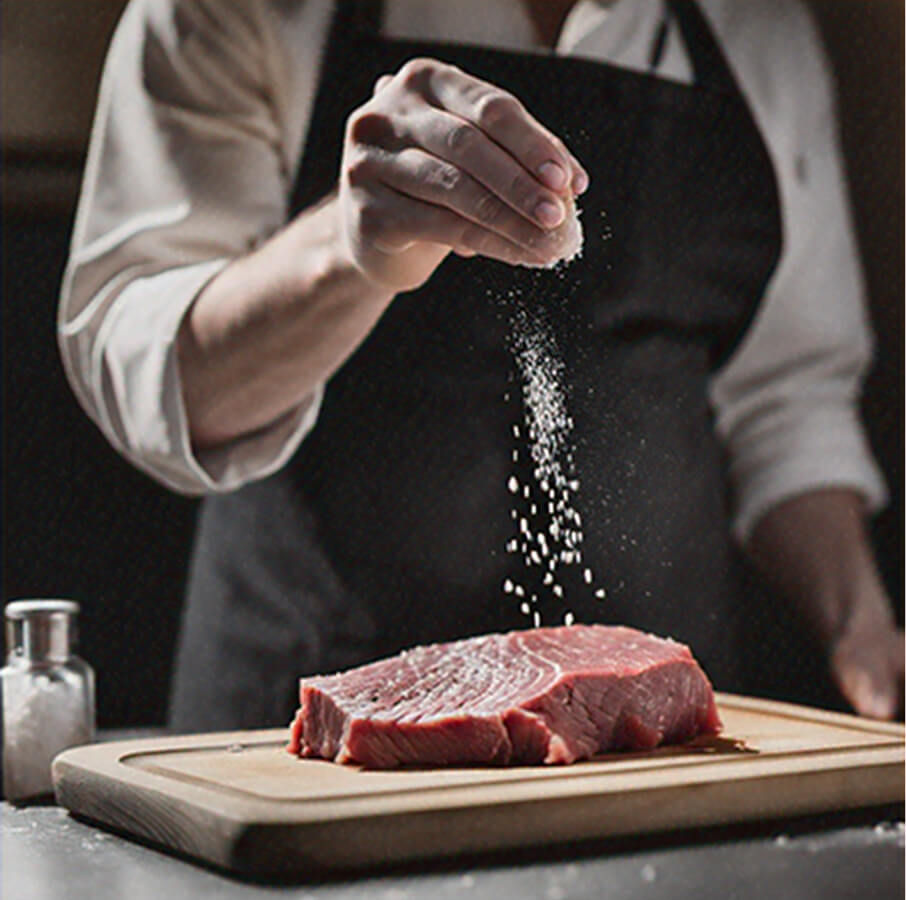
Season the good fresh beef fillets with salt and black pepper. Heat olive oil in a pan over high heat and sear the fillets for 2 minutes per side until it fully browned. Remove the beef from the pan and brush with a thin layer of mustard. Let it cool.
1
Season the good fresh beef fillets with salt and black pepper. Heat olive oil in a pan over high heat and sear the fillets for 2 minutes per side until it fully browned. Remove the beef from the pan and brush with a thin layer of mustard. Let it cool.
1
Season the good fresh beef fillets with salt and black pepper. Heat olive oil in a pan over high heat and sear the fillets for 2 minutes per side until it fully browned. Remove the beef from the pan and brush with a thin layer of mustard. Let it cool.
1
Season the good fresh beef fillets with salt and black pepper. Heat olive oil in a pan over high heat and sear the fillets for 2 minutes per side until it fully browned. Remove the beef from the pan and brush with a thin layer of mustard. Let it cool.
Instructions
Quality Fresh 2 beef fillets ( approximately 14 ounces each )
Quality Fresh 2 beef fillets ( approximately 14 ounces each )
Quality Fresh 2 beef fillets ( approximately 14 ounces each )
Beef Wellington
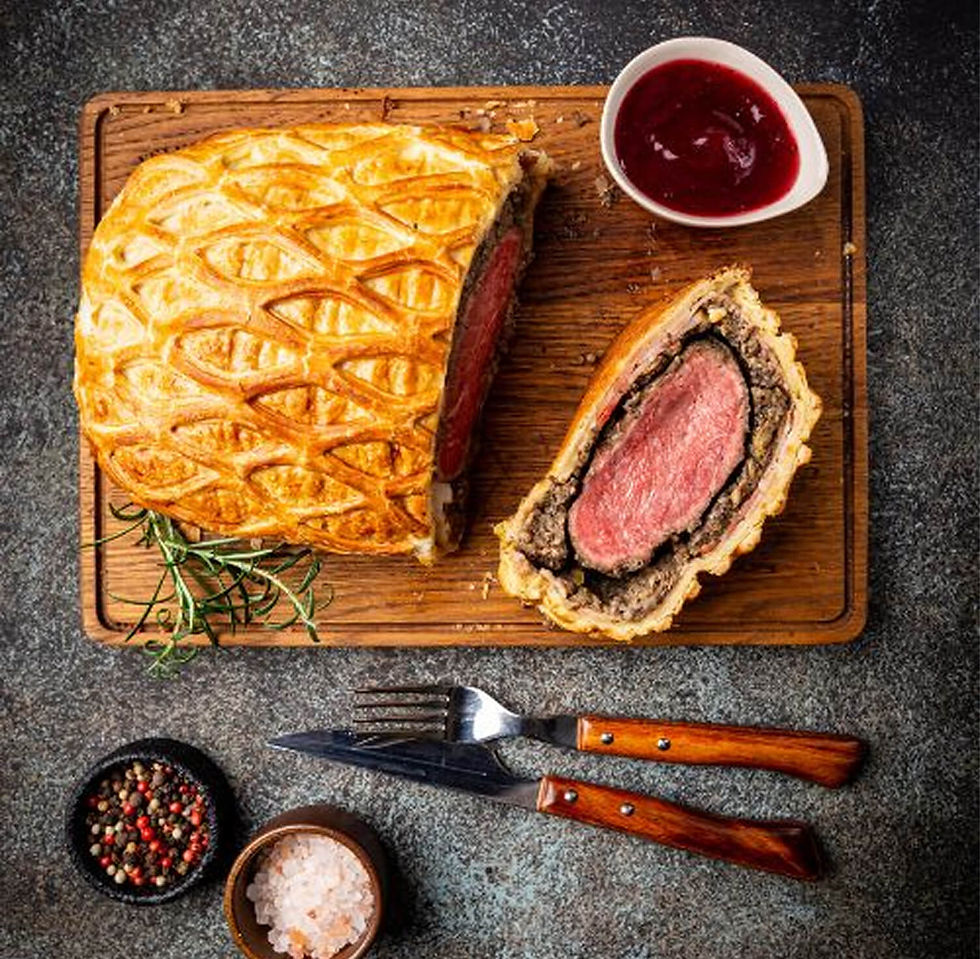
Beef Wellington
Fusion Wizard - Rooftop Eatery in Tokyo
Author Name
%20(1).jpg)
Beef Wellington is a luxurious dish featuring tender beef fillet coated with a flavorful mushroom duxelles and wrapped in a golden, flaky puff pastry. Perfect for special occasions, this recipe combines rich flavors and impressive presentation, making it the ultimate centerpiece for any celebration.
Servings :
4 Servings
Calories:
813 calories / Serve
Prep Time
30 mins
Prep Time
30 mins
Prep Time
30 mins
Prep Time
30 mins

$50
Product Title
Product Details goes here with the simple product description and more information can be seen by clicking the see more button. Product Details goes here with the simple product description and more information can be seen by clicking the see more button

$50
Product Title
Product Details goes here with the simple product description and more information can be seen by clicking the see more button. Product Details goes here with the simple product description and more information can be seen by clicking the see more button.
$50
Product Title
Product Details goes here with the simple product description and more information can be seen by clicking the see more button. Product Details goes here with the simple product description and more information can be seen by clicking the see more button.


Comments