Blog Post: The Journey to Recovery: Understanding Treatment Options

Thank you for providing the topic. Let's create a blog post focused on "Recovery."
### Blog Post: The Journey to Recovery: Understanding Treatment Options
**Introduction**
Recovery from mental health issues and substance abuse is a challenging yet rewarding journey. At Recovery Association, we understand the complexities involved and are dedicated to providing comprehensive support to individuals seeking help. This blog post aims to shed light on the various treatment options available and the benefits of seeking professional assistance.
**Understanding Recovery**
Recovery is a deeply personal process that involves making significant changes to improve one's health and well-being. It is not just about abstaining from substance use but also about building a fulfilling life. Recovery encompasses various aspects, including physical health, mental well-being, and social connections.
**Types of Treatment Options**
1. **Detoxification**
Detoxification is often the first step in the recovery process. It involves clearing the body of substances while managing withdrawal symptoms. Medical supervision during detox is crucial to ensure safety and comfort.
2. **Inpatient Rehabilitation**
Inpatient rehab provides a structured environment where individuals can focus entirely on their recovery. This type of treatment includes therapy sessions, medical care, and support groups, all within a residential setting.
3. **Outpatient Programs**
Outpatient programs offer flexibility for individuals who cannot commit to a residential program. These programs provide therapy and support while allowing individuals to maintain their daily responsibilities.
4. **Therapy and Counseling**
Therapy is a cornerstone of recovery. Various therapeutic approaches, such as cognitive-behavioral therapy (CBT), dialectical behavior therapy (DBT), and individual counseling, help individuals address underlying issues and develop coping strategies.
5. **Support Groups**
Support groups, such as Alcoholics Anonymous (AA) and Narcotics Anonymous (NA), provide a sense of community and shared experiences. These groups offer emotional support and practical advice from others who have faced similar challenges.
Want to read more?
Subscribe to dev-site-1x5395-1.wix-development-sites.org to keep reading this exclusive post.
1
Searing the Beef
Sear beef fillets on high heat for 2 minutes per side to form a golden crust. Let it cool before proceeding to keep the beef tender.
1
Searing the Beef
Sear beef fillets on high heat for 2 minutes per side to form a golden crust. Let it cool before proceeding to keep the beef tender.
1
Searing the Beef
Sear beef fillets on high heat for 2 minutes per side to form a golden crust. Let it cool before proceeding to keep the beef tender.
1
Searing the Beef
Sear beef fillets on high heat for 2 minutes per side to form a golden crust. Let it cool before proceeding to keep the beef tender.
Notes


1
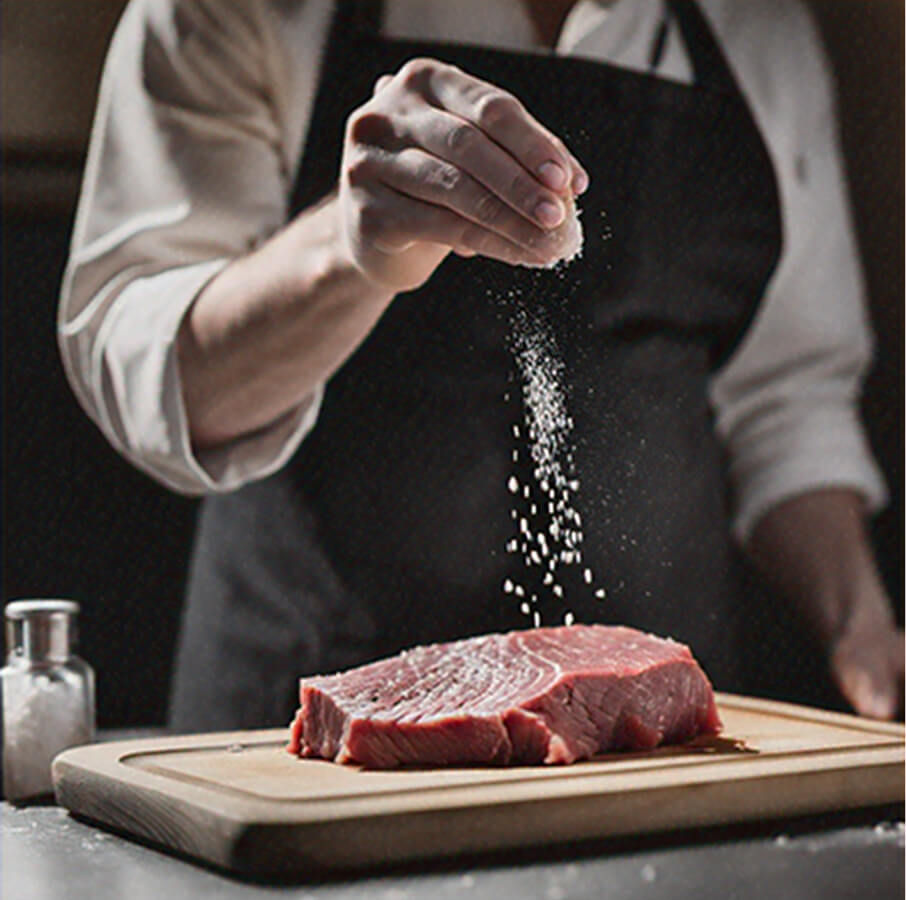
Season the good fresh beef fillets with salt and black pepper. Heat olive oil in a pan over high heat and sear the fillets for 2 minutes per side until it fully browned. Remove the beef from the pan and brush with a thin layer of mustard. Let it cool.
1
Season the good fresh beef fillets with salt and black pepper. Heat olive oil in a pan over high heat and sear the fillets for 2 minutes per side until it fully browned. Remove the beef from the pan and brush with a thin layer of mustard. Let it cool.
1
Season the good fresh beef fillets with salt and black pepper. Heat olive oil in a pan over high heat and sear the fillets for 2 minutes per side until it fully browned. Remove the beef from the pan and brush with a thin layer of mustard. Let it cool.
1
Season the good fresh beef fillets with salt and black pepper. Heat olive oil in a pan over high heat and sear the fillets for 2 minutes per side until it fully browned. Remove the beef from the pan and brush with a thin layer of mustard. Let it cool.
Instructions
Quality Fresh 2 beef fillets ( approximately 14 ounces each )
Quality Fresh 2 beef fillets ( approximately 14 ounces each )
Quality Fresh 2 beef fillets ( approximately 14 ounces each )
Beef Wellington
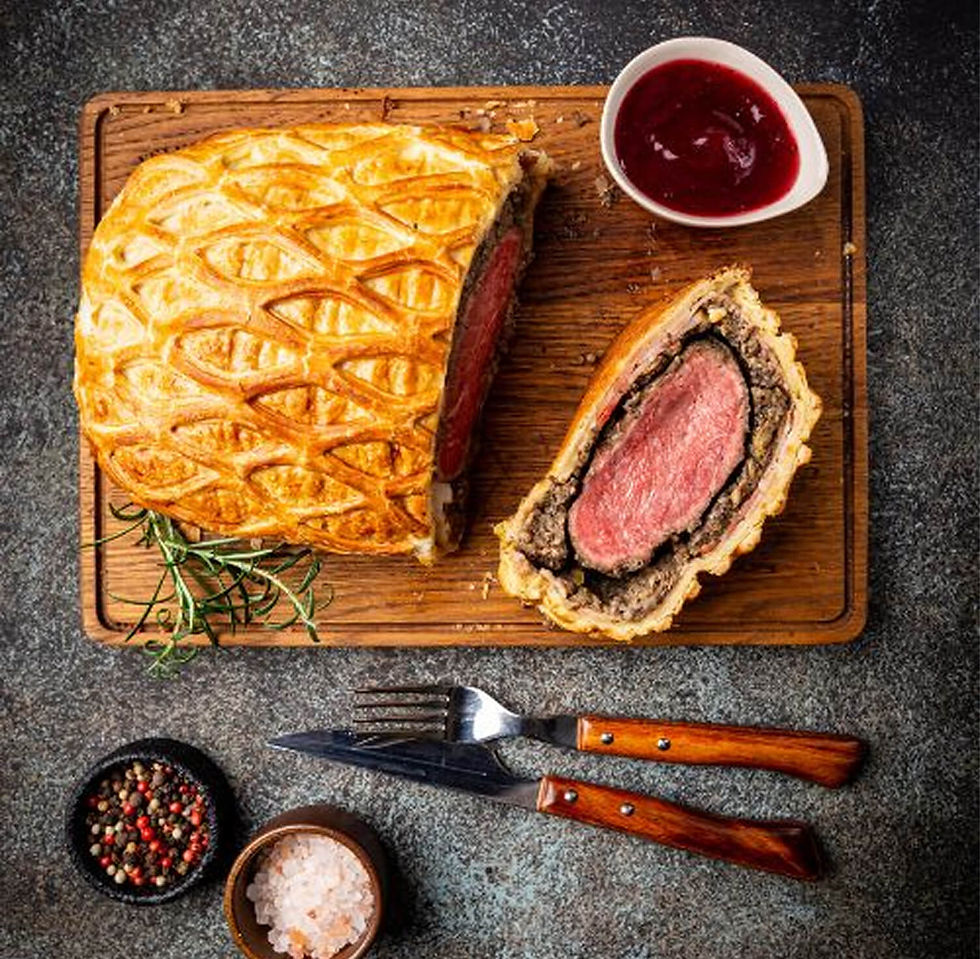
Beef Wellington
Fusion Wizard - Rooftop Eatery in Tokyo
Author Name
%20(1).jpg)
Beef Wellington is a luxurious dish featuring tender beef fillet coated with a flavorful mushroom duxelles and wrapped in a golden, flaky puff pastry. Perfect for special occasions, this recipe combines rich flavors and impressive presentation, making it the ultimate centerpiece for any celebration.
Servings :
4 Servings
Calories:
813 calories / Serve
Prep Time
30 mins
Prep Time
30 mins
Prep Time
30 mins
Prep Time
30 mins

$50
Product Title
Product Details goes here with the simple product description and more information can be seen by clicking the see more button. Product Details goes here with the simple product description and more information can be seen by clicking the see more button

$50
Product Title
Product Details goes here with the simple product description and more information can be seen by clicking the see more button. Product Details goes here with the simple product description and more information can be seen by clicking the see more button.
$50
Product Title
Product Details goes here with the simple product description and more information can be seen by clicking the see more button. Product Details goes here with the simple product description and more information can be seen by clicking the see more button.